
Beyond Your 20s: The Science Behind Why Your Skincare Routine Needs to Evolve


Is Your Skincare Routine Stuck in Time?
Think about it: Are you still using the same cleanser or moisturizer you swore by in college?
While loyalty is great, your skin isn’t the same as it was at 20. Skincare isn’t about following trends or copying what’s popular on TikTok—it’s about understanding the science of your skin.
Your skin is a living organ that changes with age, lifestyle, and environment. To care for it properly, you need to evolve your skincare routine alongside those changes. Let’s break down exactly why.
The Two Faces of Aging: Intrinsic vs. Extrinsic
Not all aging is created equal. Scientists divide the process into two main categories:
Intrinsic Aging – This is the natural, built-in aging process written in your DNA. Think of it as your skin’s internal clock. Over time, your skin will naturally lose elasticity, thin out, and repair itself more slowly. {1} This is why your skincare approach must change as you age.
Extrinsic Aging – These are the changes caused by external factors—sun exposure, pollution, smoking, stress, and even poor diet. The truth? Extrinsic aging is responsible for most of the visible changes we associate with “looking older.” For example, up to 80% of visible skin aging comes from sun exposure alone.{2} That’s why consistent skincare protection—like daily sunscreen—makes such a big difference.
Simply put, intrinsic aging is like the default settings on your phone; extrinsic aging is like the damage you do when you drop it without a case. And your skincare strategy should address both.
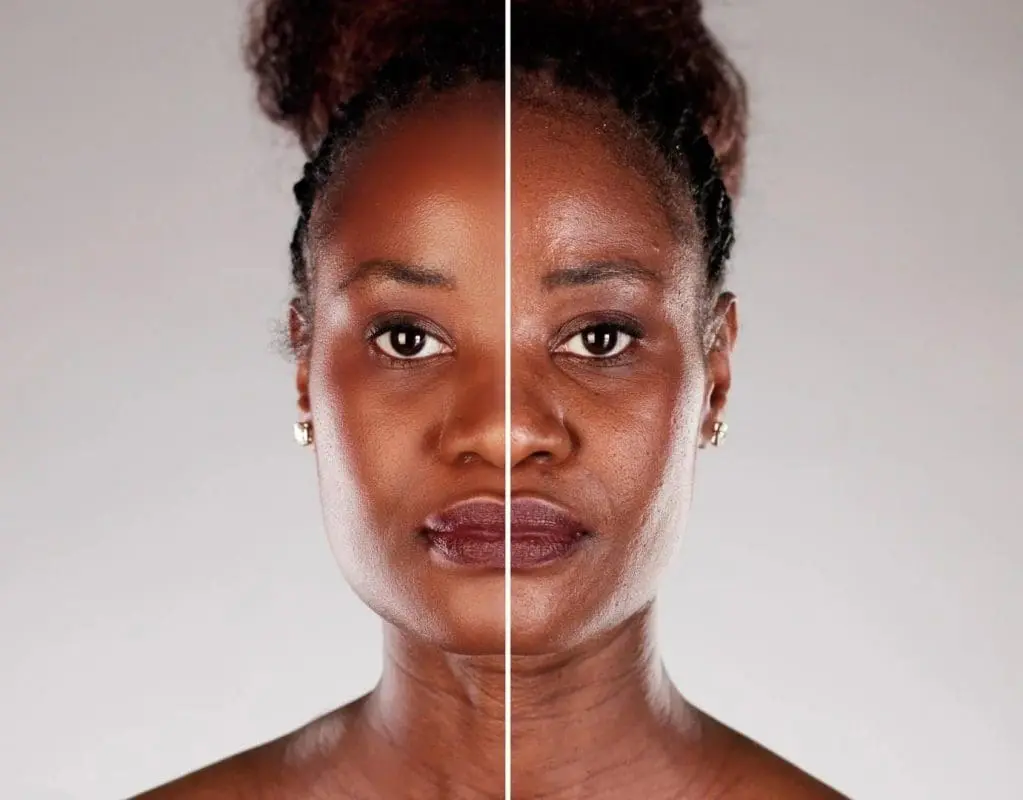
The Body’s Biological Timeline: What Happens to Skin Over Time
s the years pass, your skin goes through predictable changes on a cellular level. Here’s what happens—and why your skincare routine must evolve:
- Decline of Collagen and Elastin – These proteins act as the scaffolding of your skin. Starting in your mid-20s, collagen production drops by about 1% per year. The result? Fine lines, sagging, and loss of firmness.
- Slower Cell Turnover – Young skin renews itself every ~28 days. As you age, this process slows down, sometimes taking up to 60 days. This leads to a dull, uneven complexion.
- Reduced Hydration & Oil Production – Oil glands produce less sebum, and the skin’s ability to hold water decreases. This is why skin often feels drier and more fragile with age.
Aging By Skin Type: How It Shows Up Differently
While everyone’s skin ages, the journey isn’t identical. Your skin type shapes how you’ll notice the changes.
Dry Skin – Early fine lines and wrinkles (especially around the eyes and mouth). A weakened barrier makes skin more sensitive and prone to redness. Flakiness and rough patches become more common.
Oily Skin – Enlarged pores that become more noticeable with age. Deeper expression lines due to thicker skin and active sebaceous glands. Adult acne can linger or reappear, making it harder to manage both breakouts and wrinkles.
Normal Skin – Experiences the “classic” signs of aging—fine lines, slight dullness, mild sagging. Tends to age more slowly but still benefits from preventive care.
Combination Skin – A tricky mix: oily areas may develop enlarged pores, while dry patches show early fine lines. Balancing hydration and oil control becomes increasingly challenging.
Sensitive Skin – More prone to irritation from harsh anti-aging treatments. Inflammation can worsen visible aging, making a gentle approach essential.
Science First, Products Second
Aging is inevitable, but how it shows up on your skin depends on biology, lifestyle, and skin type. The key takeaway? Your skincare routine shouldn’t stay the same decade after decade—it must adapt.
In Part 2, we’ll dive into actionable, age-based ingredient recommendations—from the antioxidants you should start in your 20s to the peptides and retinoids that become essential later on.
Your skin’s journey is unique. Understanding the science behind it is the first step toward making smarter choices for a healthier, longer-lasting glow.


